Module 4 – Model It! OLD
Building Healthy Boundaries
English audio
audios en Español

Building relationships with your campers is one of the most important aspects of your job. From day one, you’ll be a role model for how to live together respectfully.
Developing healthy relationships is about navigating boundaries and consent. Camp is a fun space where kids can take healthy risks and make connections with other campers and staff. Campers thrive on appropriate amounts of affection and physical contact. Any contact, however, must occur as part of safe interactions.
To determine whether you are modeling healthy boundaries, ask yourself these three questions:
- Is what I am doing or saying in the camper’s best interest?
- Is my behavior supporting this camper?
- Am I building self-esteem or growing self-confidence in this camper?
Safe and Unsafe Touch
English audio
audios en Español
Knowing the difference between appropriate physical contact versus touch that can be uncomfortable is a good place to start when modeling boundaries. At CampSafe, we call this concept Safe and Unsafe Touch.
Sort the following types of touch according to what you think is usually safe, or potentially unsafe. Think about what your camp’s policies or rules are. Drag and drop. When done, click Check.
Consent is Key
English audio
audios en Español
When we hear the word consent, many people automatically think about sexual relationships. Consent is much bigger than that. We give consent or permission throughout each day. Developing healthy relationships, counselor–to–camper and camper-to–camper, is about navigating boundaries and consent. Consent is agreeing to something or giving permission for something – it can be asking a camper permission to help them get climbing equipment on, or one camper asking another camper if it is okay if they borrow a piece of clothing.
It’s crucial to recognize that a Safe Touch is only safe if the person being touched is comfortable with the physical contact. Because every camper is different, what feels safe and comfortable to one camper may feel uncomfortable to another. Respecting individual boundaries and asking for consent is a perfect way to model appropriate behavior.

Look and Listen
English audio
audios en Español

If a camper isn’t comfortable with your actions, they might not speak up. This is why consent is so important for both of you. When you ask, you give a child the choice to say no and it can become an empowering interaction for you both.
Discomfort with touch might be communicated through indirect reactions, such as:
- Awkward laughing
- Silence
- Lack of eye contact
- Sagging shoulders
- Expressions or signs of uncertainty
Listening to and carefully observing a child’s communications, whether spoken or through body language, is crucial to creating a safe camp environment for everyone.
Consider this: Consent and Setting Healthy Boundaries
English audio
audios en Español
Model It with Cabin Chats
English audio
audios en Español

Model Consent and Boundaries
Practice Saying No
Be Approachable
Setting Expectations With Campers Using Cabin Chats
English audio
audios en Español
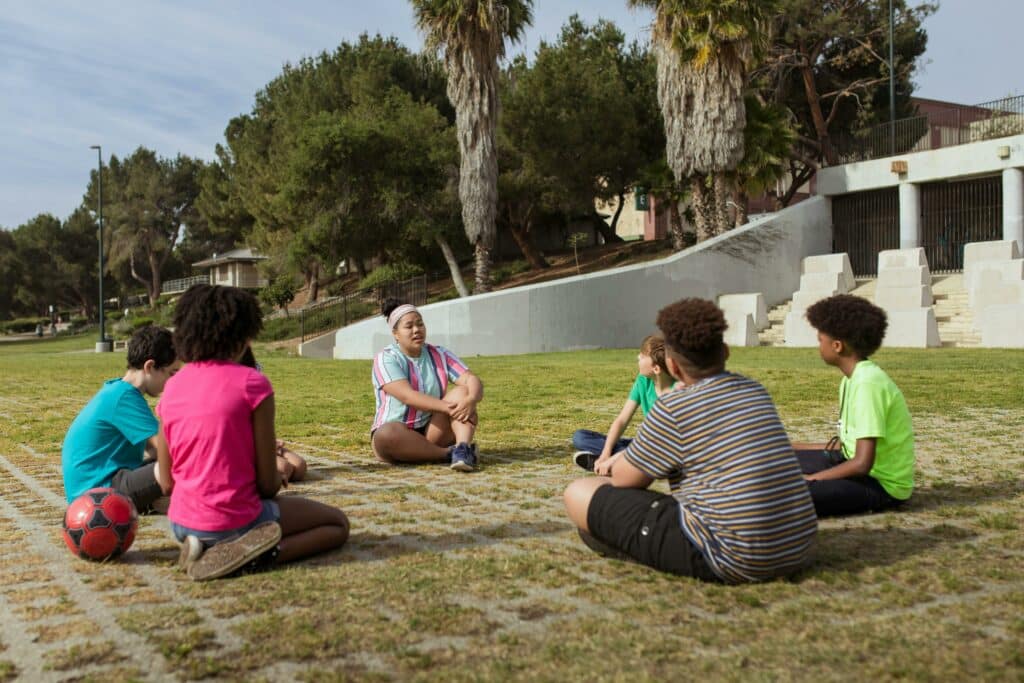
During the first 48 hours of camp is the time to establish connection and expectations with campers. You will engage the campers in fun and informative activities which help set the expectations for appropriate behavior, where and how to access guidance/help from a trusted adult, and support campers in understanding about their personal space and privacy.
When talking to campers about personal safety (or any type of safety), you do not want to teach from a place of fear. Rather, your goal is to teach campers Personal Safety, to empower them with skills and knowledge they can use to keep themselves safe.

The teaching begins on day one, during camper orientation. It is your first opportunity to set a positive tone with campers and to establish clear expectations. This is the time when campers learn what is and is not acceptable behavior toward others, which helps ensure they will have an awesome and safe camp experience – socially, emotionally, and physically.
Let the campers know that personal safety goes hand in hand with other safety skills you will also be talking about such as their health, fire safety and swimming.
One way to do this is through ‘Cabin Chats’. Amongst the fun of name games and getting to know each other and the camper’s interests, is a great place and time to set the above expectations. Consider that campers are feeling excited and also apprehensive about being at camp, even the returning campers. These conversations are important and informative and alleviate anxiety by providing structure and answers for the campers.
Ask What If Questions
English audio
audios en Español
For example: As the counselor, ask some what if questions. But rather than just letting the campers know what the ‘rule’ is, empower campers, of all ages, to problem solve the question through group discussion.
What happens if you get separated from your group and don’t know where to go?
What if I have a stomachache and can’t leave the bathroom and everyone is headed out to activities?
As the counselor, normalize that sometimes these things happen and it is okay. Discuss that even though this might feel embarrassing, everyone in the room understands these problems. This type of question can lead to a discussion about how to access help, and how to be helpful and kind to each other in many types of situations. Ask the kids what they might do in the above situations. Ask how they could help a friend. Campers can be asked to consider what other ways they can be helpful and kind to each other, such as: encouraging a friend to try something new (ropes course, new sport or activity, new food); being there for a homesick cabin mate.
English audio
audios en Español
Other questions for problem solving discussion on the topic of privacy and personal space might include:
- Where should I keep my personal belongings?
- What is my personal space within the cabin?
- Is my bed my personal space?
- Is someone allowed to sit on my bed?
- Should they check first with me?
- Can my counselor sit on my bed? (Confirm your camp’s policy. CampSaferecommends counselors and other staff should not sit or lay on a camper’s bed.)
- Is it okay to ask someone to not sit on my bed?
- Where can I change my clothes if I want privacy?
These discussions should be guided by the camp’s rules, values and policies.
Telling and Tattling
English audio
audios en Español
Let your group know there is ZERO tolerance for bullying. Help them discuss: What does bullying mean? How might it occur at camp? What to do if it does happen? And explain the important role of an Upstander – a camper who sees something happening and either tries to stop it or seeks help from a staff member.
This leads directly to a discussion of the difference between tattling and telling
Tattling
Tattling is simply trying to get another camper in trouble.
Telling
Telling is different. Telling is when a camper goes to an adult for safety help, either for themselves or for someone else.
Body Boundaries
English audio
audios en Español
Transition the discussion about bullying to the topic of body boundaries. Have the group discuss what does body boundaries mean to them?
The point to be made is this: Campers and staff have the right to PRIVACY and BODY BOUNDARIES. When saying this to campers, do so in the same matter-of-fact way you share other information with your campers. At first, you may find this difficult or uncomfortable to do. If so, practice with another staff member before speaking with your campers. Keep in mind that you are modeling for your campers, communicating a message that body boundaries are important and okay to talk about. If you present this message while looking uncomfortable, your campers will realize this and be likely to conclude that they shouldn’t approach you about sensitive issues that may arise.
For Example: Ask the campers: What is the difference between privacy and personal space? Have them discuss, and you can give an example. My bed is my personal space, but my journal (or my letters) are private.
Ask: What do you think Body Boundaries are? What does healthy body boundaries look like and how do they make you feel? What might unhealthy body boundaries look like and how might that make someone feel?
There are many correct ways to answer these questions. Have the campers discuss. This helps set expectations for how all of you will live together respecting each other’s space and body boundaries.
A simple definition for body boundaries is an invisible and personal set of rules that define what is a safe touch and what is an unsafe touch for the individual and what the camper is comfortable with. An example, tickling – some people like tickling and others dislike it immensely.
It is important in the conversation to let campers know that there are rules about private parts, all the parts of their bodies covered by their bathing suite. Note to them that we all have a right to privacy and that their body is private and no one should be touching each other, or making anyone feel uncomfortable.
Let campers know up front that they will not get in trouble for ‘telling’ or reaching out for help or guidance. Reinforce that telling is key to keeping campers safe from bullying or any other type of harm. This is a way we help take care of each other. Everyone has the right to be safe and comfortable at camp and if there is something bothering them then they have full permission to talk to a counselor, a person on the Camper Advocate Team or any other trusted adult to get support.
Transition the discussion about bullying to the topic of body boundaries. Have the group discuss what does body boundaries mean to them?
Setting Body Boundaries
English audio
audios en Español
Next, it is important to help campers consider what to do if someone else (camper or staff) asks them to do something they don’t want to do (go to the lake unsupervised, play a “secret” game, play a trick on someone, etc.). Open this up for consideration in the same way you led discussion of the other issues. What are my options? What are some ways to say “I don’t want to do that”? Sometimes a simple “No, let’s do something else” is enough. In other situations, that may not work. Let your campers know that if they ever feel unable to manage a situation, they can come to you and talk about what to do.
All of the “cabin chats” just discussed help create a Culture of Safety in your camp. Kids who understand that boundaries and structure exist at camp and that they have access to a staff member who is approachable, and who is there to keep them safe will have a firm foundation for a fun and safe camp experience.